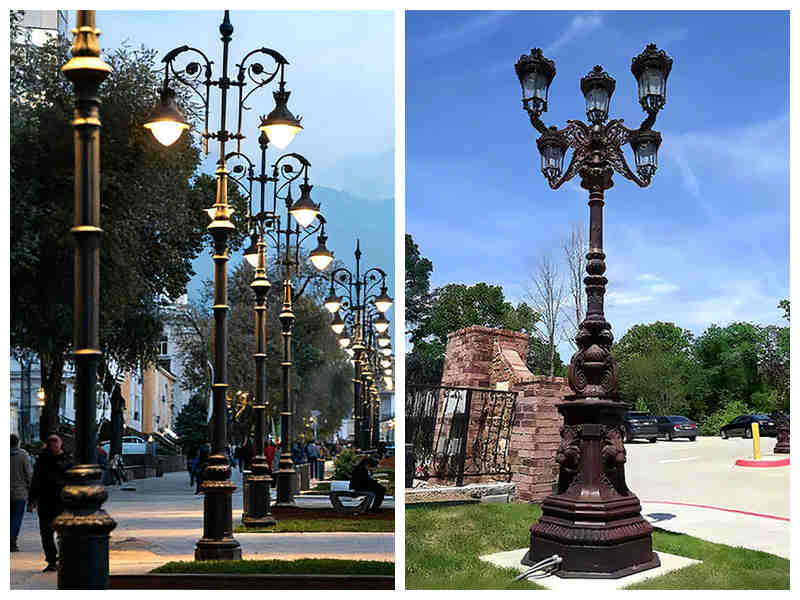
Choosing the right light poles for your project can be tricky. Should you go with classic cast iron light poles or modern cast aluminum light poles? Both have pros and cons, and the best choice depends on your needs—whether it’s durability, cost, or aesthetics.
At Hengsheng Light Pole, we’ve supplied both materials for years. In this guide, we’ll break down the differences so you can make an informed decision.
Cast Iron Light Poles: The Traditional Choice
Key Advantages of Cast Iron
Cast iron offers exceptional longevity and structural integrity that makes it well-suited for demanding applications. The material possesses inherent strength that enables it to withstand substantial impacts and environmental stresses, with a potential service life exceeding fifty years when properly maintained. This remarkable durability is complemented by its traditional aesthetic appeal, featuring classic designs and substantial proportions that make it particularly appropriate for historic districts, parks, and upscale developments where architectural authenticity is valued. Furthermore, the significant weight of cast iron poles provides inherent stability, making them less susceptible to tipping in extreme wind conditions or accidental impacts.
Important Limitations
Despite its strengths, cast iron presents several practical challenges that must be considered. The substantial weight that contributes to its stability also creates installation difficulties, typically requiring heavy machinery and specialized equipment for proper placement, which increases both complexity and cost. Additionally, cast iron is inherently vulnerable to corrosion and requires regular maintenance including repainting and protective coatings to prevent rust formation, particularly in humid or coastal environments. These factors combine to result in higher overall expenses, with both initial material costs and long-term maintenance investments exceeding those of alternative materials like aluminum.
Ideal Application Scenarios
Cast iron light poles are most appropriately specified for projects where historical authenticity and long-term durability take precedence over initial cost considerations. They represent an optimal solution for historic preservation districts, traditional urban landscapes, and architectural contexts where maintaining period-appropriate aesthetics is essential. Their substantial construction makes them particularly valuable in geographic locations prone to severe weather conditions, including coastal areas and regions experiencing high wind patterns. While the initial investment is significant, their extended service life makes them a cost-effective choice for projects with long-term planning horizons and adequate maintenance budgets.
Cast Aluminum Light Poles: The Modern Alternative
Advantages of Cast Aluminum
Cast aluminum offers significant benefits in logistics and long-term performance. Its notably lighter weight compared to cast iron or steel facilitates transportation and installation, often eliminating the need for heavy cranes and substantially reducing labor expenses. The material possesses inherent corrosion resistance, making it an optimal solution for challenging environments such as coastal regions or areas using de-icing salts, as it completely avoids rust formation and minimizes maintenance requirements throughout its service life. This combination of durability and low upkeep contributes to a reduced total cost of ownership over time. From an aesthetic perspective, cast aluminum provides superior versatility for contemporary designs, capable of being molded into fluid, organic, and modern forms that seamlessly integrate with sophisticated urban landscapes.
Limitations to Consider
Despite these strengths, cast aluminum does present certain constraints that require careful evaluation. The material’s impact resistance falls below that of cast iron or steel – while it doesn’t undergo brittle fracture, it can sustain permanent dents or deformation when struck by heavy vehicles. Regarding visual appeal, its characteristically modern and less substantial appearance may create visual discord in historic districts or locations where traditional, robust aesthetics are preferred. Furthermore, although the long-term cost profile is favorable, the initial investment for cast aluminum poles typically exceeds that of steel alternatives, which may influence procurement decisions based on immediate budget constraints.
Recommended Applications
Cast aluminum light poles prove particularly suitable for projects prioritizing long-term durability with minimal maintenance and contemporary design sensibility. They represent an excellent choice for urban streetscape revitalization projects, modern residential and commercial developments, and any location in coastal regions or high-humidity environments where corrosion resistance is paramount. The simplified installation process also makes them the preferred option for projects with tight deadlines or where access for heavy machinery is either difficult or cost-prohibitive.
Material Comparison: Cast Iron vs. Cast Aluminum
| Factor | Cast Iron | Cast Aluminum |
|---|---|---|
| Lifespan | 50+ years | 30-40 years |
| Maintenance | High (regular repainting required) | Low (virtually maintenance-free) |
| Weight | Very heavy (requires heavy equipment) | Lightweight (easy to handle) |
| Cost | Higher upfront investment | Lower total lifetime cost |
| Weather Resistance | Good (with proper maintenance) | Excellent (naturally corrosion-resistant) |
| Aesthetics | Classic, traditional appearance | Modern, sleek designs |
Which Should You Choose?
Material Selection Overview
For municipal infrastructure projects, choosing between cast iron and aluminum light poles requires careful consideration of environmental conditions, structural demands, and long-term value. Each material offers distinct advantages for different applications.
Corrosion Resistance Analysis
Coastal regions with high salt exposure demand aluminum’s superior corrosion resistance. Its natural oxide layer prevents rust formation, ensuring decades of service in humid environments. Inland areas with dry climates can utilize cast iron effectively, though protective coatings remain essential. Aluminum maintains its integrity without additional treatments, making it ideal for locations where maintenance access is challenging.
Strength and Wind Resistance
Cast iron provides exceptional structural strength, with typical tensile strength ranging from 150-250 MPa, significantly higher than aluminum’s 70-150 MPa. This makes cast iron preferable for high-wind zones exceeding 60 mph and when supporting heavy auxiliary equipment like surveillance cameras or traffic monitoring devices. Documented cases from hurricane-prone regions show cast iron poles maintaining structural integrity where other materials failed.
Comprehensive Cost Analysis
While cast iron typically costs 20-30% less initially than aluminum, the lifetime cost picture reveals different advantages. Aluminum requires minimal maintenance, with estimated 50-year maintenance costs being 40-60% lower than cast iron. Cast iron demands regular painting and corrosion treatment, adding to long-term expenses. However, cast iron’s superior durability may justify these costs in high-traffic or vulnerable locations.
Aesthetic and Design Considerations
Historic districts and traditional architectural settings benefit from cast iron’s classic appearance and ornate design capabilities. The material’s weight and substantial presence complement heritage areas perfectly. Modern urban landscapes and contemporary developments achieve better visual harmony with aluminum’s sleek profiles and lighter aesthetic. Aluminum offers greater flexibility for custom designs and can be powder-coated in various colors to match urban design schemes.
Professional Recommendations
For major thoroughfares requiring maximum strength and cost-effectiveness, cast iron delivers proven performance. Its weight and durability make it suitable for high-traffic locations where impact resistance is crucial. Parks, pedestrian zones, and coastal areas benefit from aluminum’s corrosion resistance and modern appearance. The material’s lighter weight simplifies installation in hard-to-access locations.
Why Choose Our Light Pole Solutions
Hengsheng Light Pole provides both cast iron and aluminum solutions manufactured to the highest standards. Our materials undergo rigorous quality testing to ensure they meet municipal specifications. We offer custom design services to match any architectural requirement and provide volume pricing for large-scale projects.
Final Recommendation Summary
The optimal choice depends on specific project requirements. Cast iron remains unmatched for long-term durability and traditional applications, particularly in historic or high-wind locations. Aluminum excels in low-maintenance scenarios and modern urban environments, especially in coastal regions. Both materials serve distinct purposes in municipal infrastructure planning.
Professional Consultation Available
Our technical team can provide detailed recommendations based on your specific project parameters. Contact Hengsheng Light Pole for expert guidance and comprehensive project quotations tailored to your municipal needs.
Leave A Message