What This Means for Municipal Suppliers & Distributors:
While city planners debate design, your challenge is sourcing. This article cuts through the trends to give you a practical checklist: the exact material specs, certifications, and design features you need to look for when supplying anti-vandal furniture to European tenders. We’ll also show how partnering with a foundry that understands these demands (like ours) can become your key competitive advantage.
The Rising Demand for Anti-Vandal Street Furniture in European Urban Renewal Projects
Urban spaces across Europe are under pressure. Recent studies indicate that municipal budgets spend millions annually repairing or replacing vandalized public assets. From broken benches to defaced bus shelters, vandalism drains resources and degrades community pride. This persistent challenge is driving a significant shift in urban planning. City authorities and designers are now prioritizing resilience, turning to specialized solutions to create spaces that endure. At the forefront of this movement is the integration of robust, intelligently designed street furniture. The rising demand for anti-vandal street furniture is a direct response to this need, becoming a cornerstone of modern European urban renewal projects. These initiatives seek not just aesthetic upgrades but long-term sustainability and functionality.
The financial and social costs of repeated damage are unsustainable. Communities feel the impact deeply, with neglected spaces fostering a sense of insecurity. Traditional furniture, while charming, often fails to withstand targeted abuse. This reality forces a reevaluation of material and design choices. The focus is shifting toward products engineered to resist tampering, graffiti, and impact without sacrificing visual appeal. This approach is fundamental for durable public space design, ensuring that investments last and public areas remain welcoming.
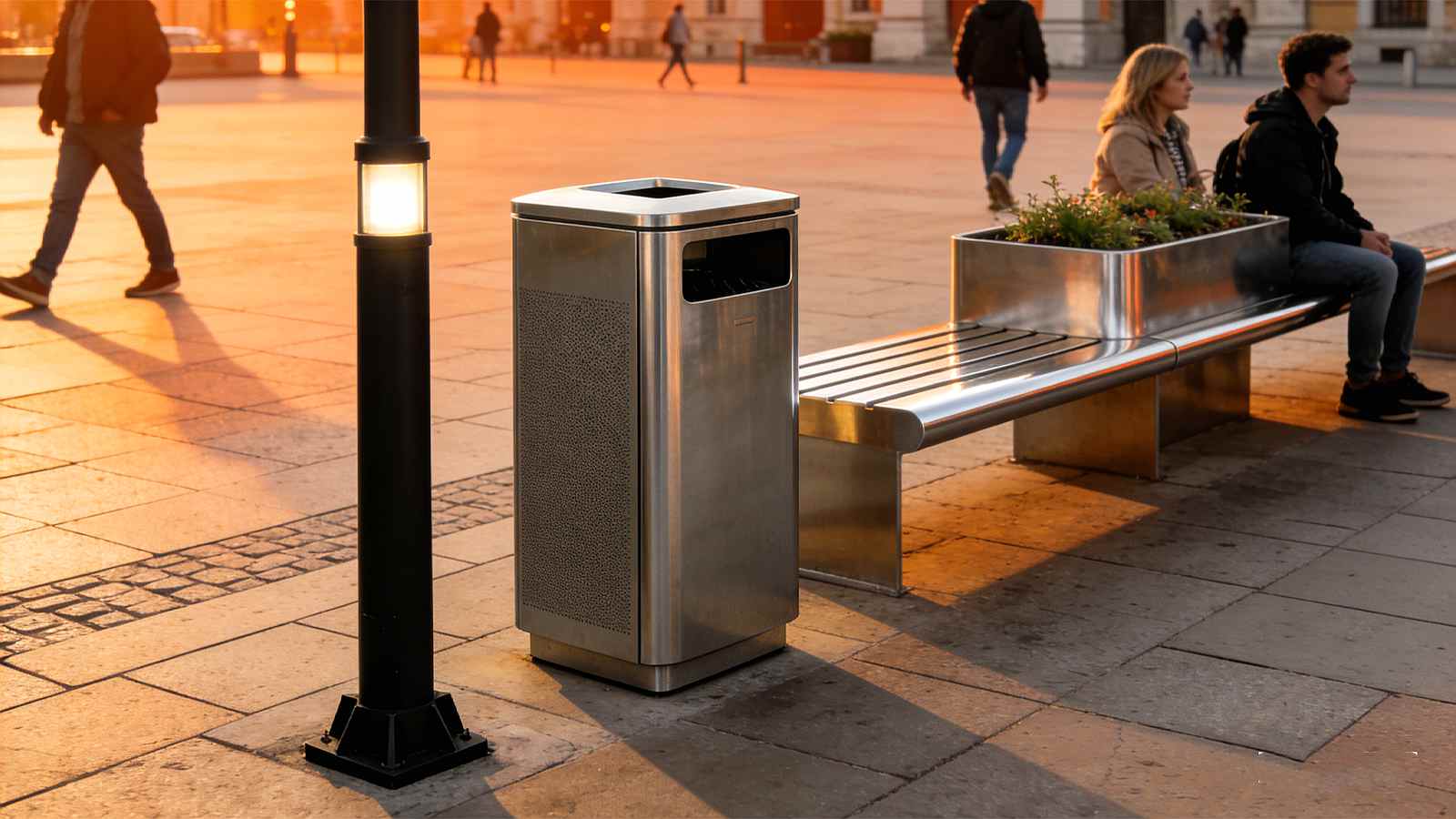
What defines true anti-vandal furniture? It is a combination of high-performance materials and clever engineering. Manufacturers use reinforced stainless steel, precast concrete, and resilient polymers that are difficult to cut, scratch, or burn. Fasteners are often concealed or require specialist tools, deterring disassembly. Surfaces are treated with anti-graffiti coatings, allowing paint and markers to be easily removed without chemicals. Designs avoid flat panels that invite tagging, opting instead for textured or perforated finishes. These features work together to create a formidable barrier against wear and tear.
The benefits extend far beyond mere resistance. By specifying anti-vandal street furniture, municipalities achieve substantial life-cycle cost savings. The reduced need for repairs, repainting, and replacement frees up budgets for other community services. Maintenance crews can focus on horticulture or cleaning rather than constant repairs. This reliability ensures that public spaces are consistently available for enjoyment, supporting social cohesion and daily routines. The furniture becomes a dependable feature of the urban landscape.
In the context of European urban renewal projects, this durability is paired with sophisticated design. The era of bulky, prison-like fixtures is over. Today’s offerings are sleek, modular, and often multifunctional. A bench incorporates planter boxes, a bike rack doubles as a lighting column, and a litter bin includes smart compaction sensors. This integration supports the holistic goals of renewal: creating efficient, attractive, and people-centric places. Designers collaborate with manufacturers to ensure pieces complement historical settings or bold contemporary architectures.
Sustainability is a critical driver. Durable furniture aligns perfectly with circular economy principles. Long-lasting products reduce raw material consumption and waste generation. At end-of-life, the high-quality metals and concretes are fully recyclable. This environmental consideration is a key factor in procurement decisions across European cities. It demonstrates a commitment to future generations, making durable public space design an ethical choice as well as a practical one.
Technology is enhancing these solutions. Smart furniture is emerging, featuring integrated LED lighting powered by solar panels, USB charging ports with reinforced covers, and even environmental sensors. These additions increase utility but are housed within the same tamper-resistant bodies. They represent the next evolution, where infrastructure contributes actively to urban management and citizen services while remaining resilient.
Community engagement has proven vital. When residents are involved in selecting furniture for their renewed squares or parks, they develop a sense of ownership. This psychological aspect can reduce misuse. People are more likely to protect assets they had a voice in choosing. Therefore, the process of specification becomes as important as the product itself, fostering civic pride alongside physical renewal.
Challenges remain, of course. A primary concern is balancing security with comfort and inclusivity. Furniture must not be unwelcoming. Design innovation continues to address this, using wood slats within metal frames or contoured seating that is both comfortable and robust. Another challenge is initial investment, though the long-term return is clearly positive. Educating stakeholders on this total cost of ownership is an ongoing task for suppliers and planners.
The market for anti-vandal street furniture is expanding rapidly. Manufacturers are responding with ever-more creative and certified products. Independent testing standards, such as the European EN 14383 series for crime prevention, help cities make informed comparisons. This professionalization gives specifiers confidence in product performance claims.
Looking ahead, the integration of resilient furniture will only deepen. As climate adaptation becomes urgent, materials must also withstand extreme weather. The principles of vandal resistance dovetail with requirements for UV stability, corrosion resistance, and thermal tolerance. The resilient city of the future will be equipped with furniture that is as tough as it is attractive.
In conclusion, the rising demand for these solutions is a logical and positive trend. European urban renewal projects are smarter and more ambitious than ever. They aim to create legacies, not quick fixes. By investing in anti-vandal street furniture, cities build the backbone of durable public space design. They choose longevity over fragility, and confidence over constant concern. The result is urban environments that are not only beautiful and functional but also steadfast. They are spaces that can truly thrive for decades, supporting the vibrant public life that is the heart of every European community. This is the new standard for urban living, and it is built to last.


Leave A Message