Worried your Cast Iron Bollards might look great but fail when needed? Proper installation is what turns decorative pieces into real protection! Discover must-know bollard installation standards that ensure safety and longevity. At Hengsheng Casting, we don't just supply premium Cast Iron Bollards - we provide complete commercial bollard specs, installation guides, and engineering support. Skip the guesswork and get bollards that perform as good as they look! 🛡️🔧
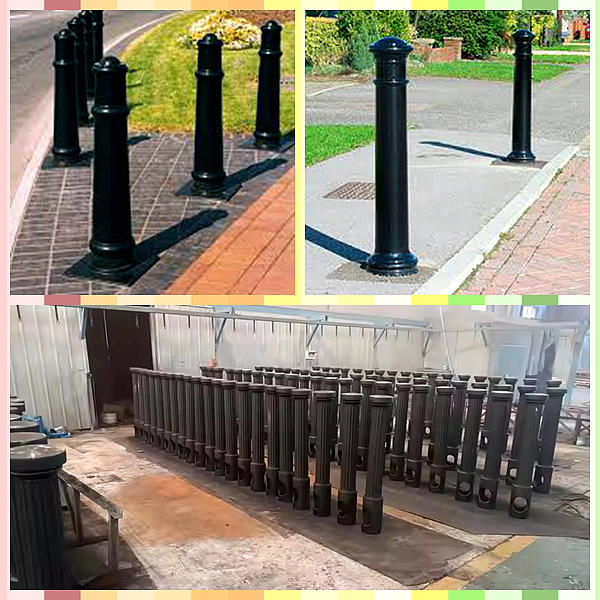
Introduction: Are Your Bollards Installed Correctly – Or Just Decorative?
Hey procurement specialists! Ever wondered why some Cast Iron Bollards last decades while others fail within years? The secret isn’t just in the quality of the bollard – it’s in how it’s installed.
At Hengsheng Casting, we’ve supplied over 50,000 bollards worldwide and seen firsthand how proper installation makes all the difference. In this guide, we’ll walk you through:
✔ Key international installation standards you must verify
✔ Common (and costly) installation mistakes to avoid
✔ Why Hengsheng’s bollards outperform when installed correctly
Let’s ensure your bollards are as strong in the ground as they are in design!
Part 1: The Critical Role of Installation Standards for Cast Iron Bollards
The Harsh Truth About Poor Installations
A fundamental reality in perimeter security is that a grade-A bollard with a poor installation becomes grade-F protection. The inherent strength of the cast iron fixture is entirely dependent on the integrity of its foundation and installation.
Research from ASTM underscores this point, indicating that approximately 60% of early bollard failures can be traced back to errors made during the installation process. This statistic highlights that the performance of the bollard is a direct function of its installation quality.
The correctness of the installation procedure has a direct and profound impact on several key performance areas. It fundamentally determines the bollard’s certified crash resistance and its ability to withstand intended impact loads. Furthermore, it governs the long-term stability of the unit, preventing issues like leaning or sinking. Finally, a proper installation directly correlates with reduced long-term maintenance costs and operational longevity.
Key Standards to Verify
| Standard | Region | What It Covers |
|---|---|---|
| ASTM F3016 | North America | Impact ratings and foundation requirements |
| EN 12767 | Europe | Passive safety performance |
| AS 5100.5 | Australia | Bridge and roadside installations |
Pro Tip: Always request installation specs from your supplier before purchase!
Part 2: The Four Critical Installation Factors
Foundation Depth: The Hidden Hero
The depth of the foundation is a primary determinant of a bollard’s stability. A general rule of thumb dictates that approximately one-third of the bollard’s total height should be buried underground. For heavy-duty applications in high-impact areas, this requirement increases significantly, often necessitating deeper foundations such as a 40-inch embedment for a 36-inch tall bollard to ensure maximum crash resistance.
Concrete Quality and Curing
The specification of the concrete used in the foundation is non-negotiable for achieving design strength. A minimum of 3000 psi concrete is essential to withstand impact forces. Furthermore, proper curing time is critical; the foundation requires a minimum of 7 days to cure before any load can be applied, and a full 28 days to reach its maximum compressive strength and ensure long-term integrity.
Anchor Systems
The choice of anchor system directly influences the installation’s performance and flexibility. Direct burial, while the simplest method, offers the weakest level of support. Bolt-down plates provide a robust solution best suited for removable bollards. For permanent installations, reinforced sleeves are the top recommendation, offering superior strength and stability by securely transferring impact loads from the bollard into the concrete foundation.
Spacing Considerations
Proper bollard spacing is crucial for both security and accessibility. For vehicle protection, a spacing of 3 to 5 feet apart is effective at blocking cars without creating an impenetrable wall. In pedestrian zones, a wider spacing of 4 to 7 feet is recommended to maintain a comfortable and unobstructed flow of foot traffic while still providing clear visual demarcation.
Hengsheng Advantage
To guarantee correct installation, every Hengsheng bollard is accompanied by a detailed installation guide. Furthermore, we offer optional, direct engineering support to assist with project-specific planning and to ensure all critical factors are addressed for a successful and compliant installation.
Part 3: Common Installation Mistakes (And How to Avoid Them)
Insufficient Foundation Depth
A critically common error is failing to excavate a foundation hole of adequate depth. When a bollard is not buried deeply enough, it lacks the necessary leverage to resist impact, making it prone to being sheared off or severely bent upon collision. To avoid this, always adhere to the “one-third rule” as a minimum and verify the required depth for your specific crash rating, erring on the side of a deeper foundation for high-risk locations.
Inadequate Concrete Strength and Curing
Utilizing low-strength concrete mix or failing to allow for proper cure time are frequent, yet devastating, oversights. This results in a foundation that is brittle and unable to absorb and distribute impact energy, leading to premature failure. The avoidance strategy is strict: specify a certified 3000 psi concrete mix and enforce a full 7-day, undisturbed cure period before allowing any load on the bollard, with 28 days being ideal for achieving full design strength.
Improper Backfilling and Compaction
Backfilling the excavation around the bollard sleeve with unsuitable soil or without proper compaction creates voids and settling. This leads to water pooling, corrosion, and causes the bollard to lean or sink over time. To prevent this, always use clean, compactable gravel or flowable fill for backfilling, and employ mechanical tampers in layers to ensure uniform and solid support around the entire foundation.
Neglecting Local Site and Soil Conditions
A major mistake is proceeding with a standard installation without assessing the actual site conditions. Installing in weak, sandy, or water-saturated soils without reinforcement can compromise the entire foundation. The solution is to conduct a basic soil analysis and, in challenging conditions, consult an engineer to specify necessary enhancements such as a larger concrete footing or soil stabilization techniques to ensure a stable and durable installation.
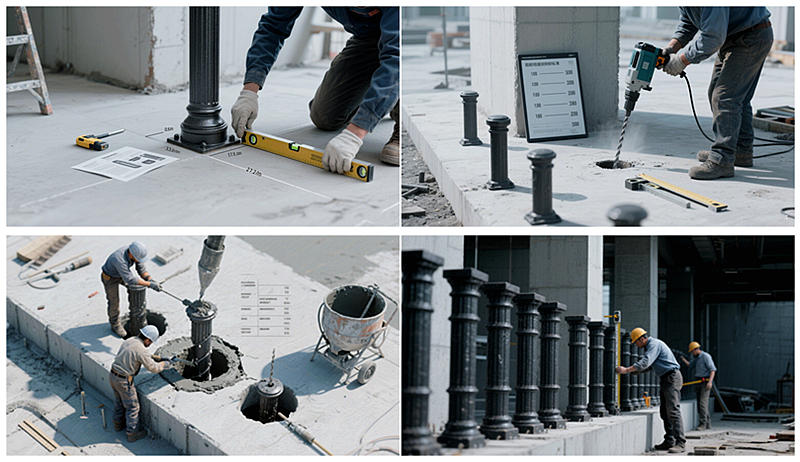
Part 4: Why Hengsheng Bollards Stand Up Better
✅ Precision Casting: Tighter tolerances = better anchor fit
✅ Reinforcement Options: Internal steel cores available
✅ Complete Kits: Bases, hardware, and templates included
✅ Global Compliance: Meet all major international standards
Final Call-to-Action: Get It Right From the Ground Up
Don’t leave your bollard performance to chance!
📩 Contact Hengsheng today for:
✔ Free installation consultation
✔ Custom engineering drawings
✔ Complete installation packages
20+ years of keeping properties safe – one properly installed bollard at a time.
High-Margin Products for Municipal Projects
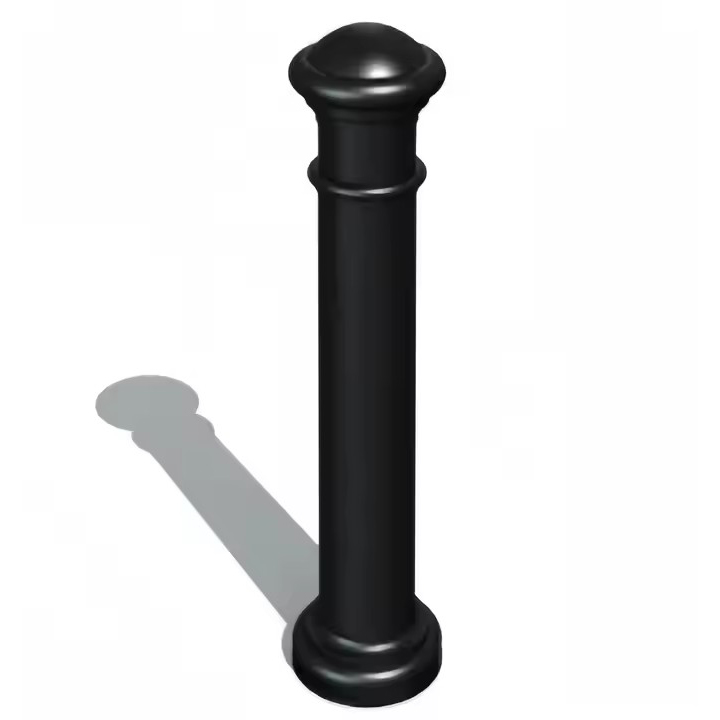
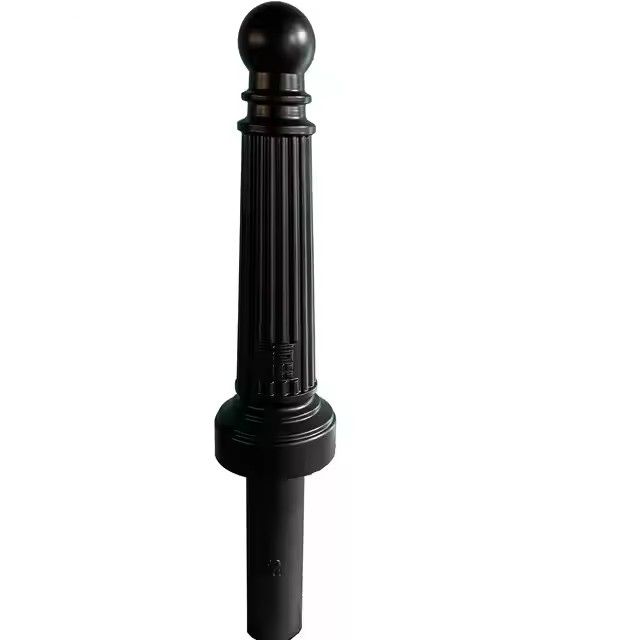
Compare with related municipal Cast Iron Bollard
Leave A Message