Learn how Lamp post Bases provide stability and safety for outdoor lighting. We review materials, installation types, and tips for selecting the right base.
Think about a city street at night. The lights create a warm glow and guide people home safely. Now, think about what holds those lights up. It is not just the pole itself. It is what sits beneath the ground and at the very bottom. That component is the lamp post base. It is the foundation of the entire structure. Without a good base, the most expensive light fixture is useless. It would wobble in the wind or lean over time. That is why we pay so much attention to them here at the factory.
The primary job of any base is to transfer the load. The weight of the pole and the lantern must go somewhere. The base pushes that weight into the ground. It also has to handle side forces. Strong winds push against the pole. The base acts like a lever to keep everything upright. If the base is weak, the leverage will snap it. This is a basic law of physics. We see it every day in our engineering tests.
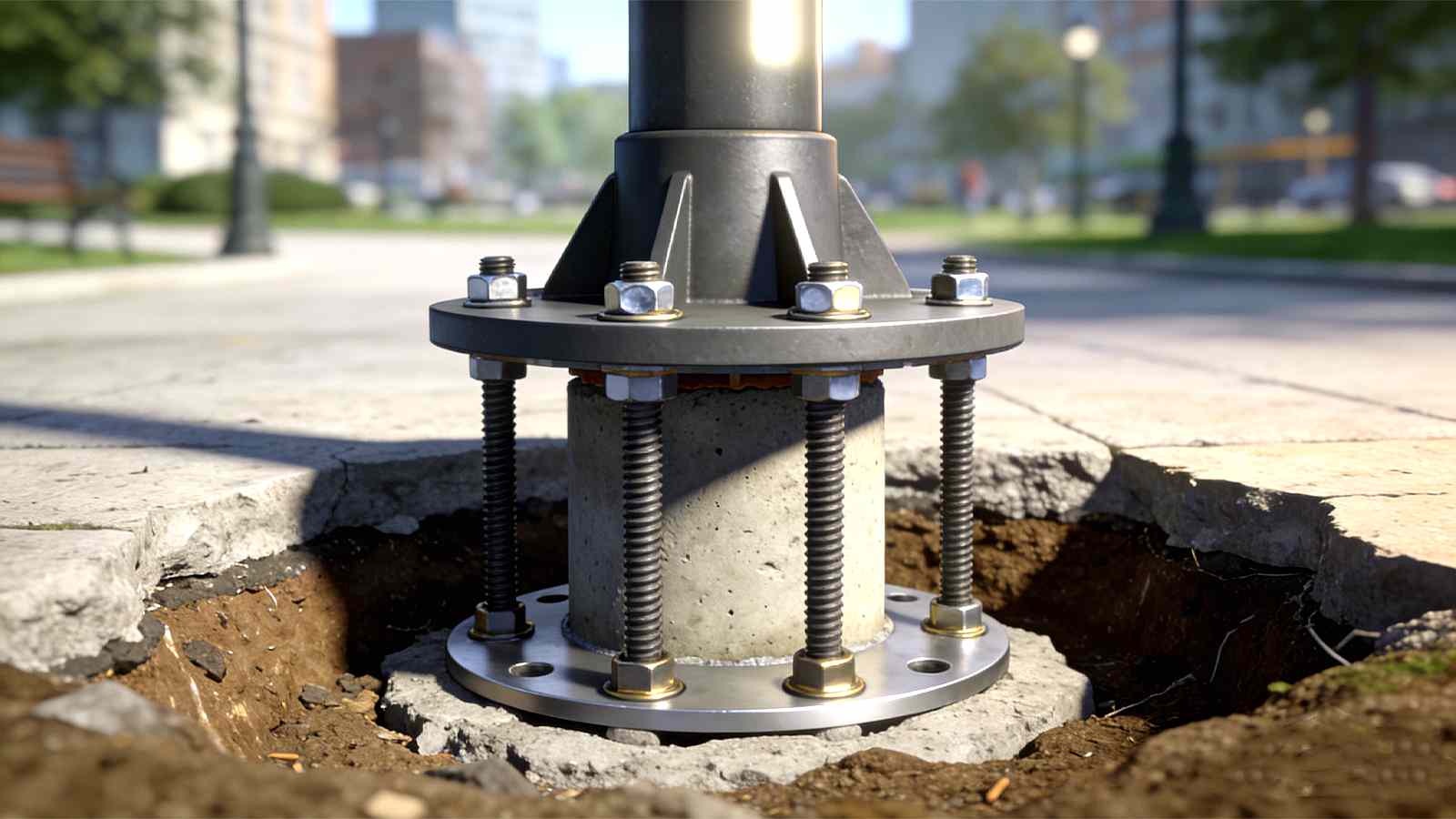
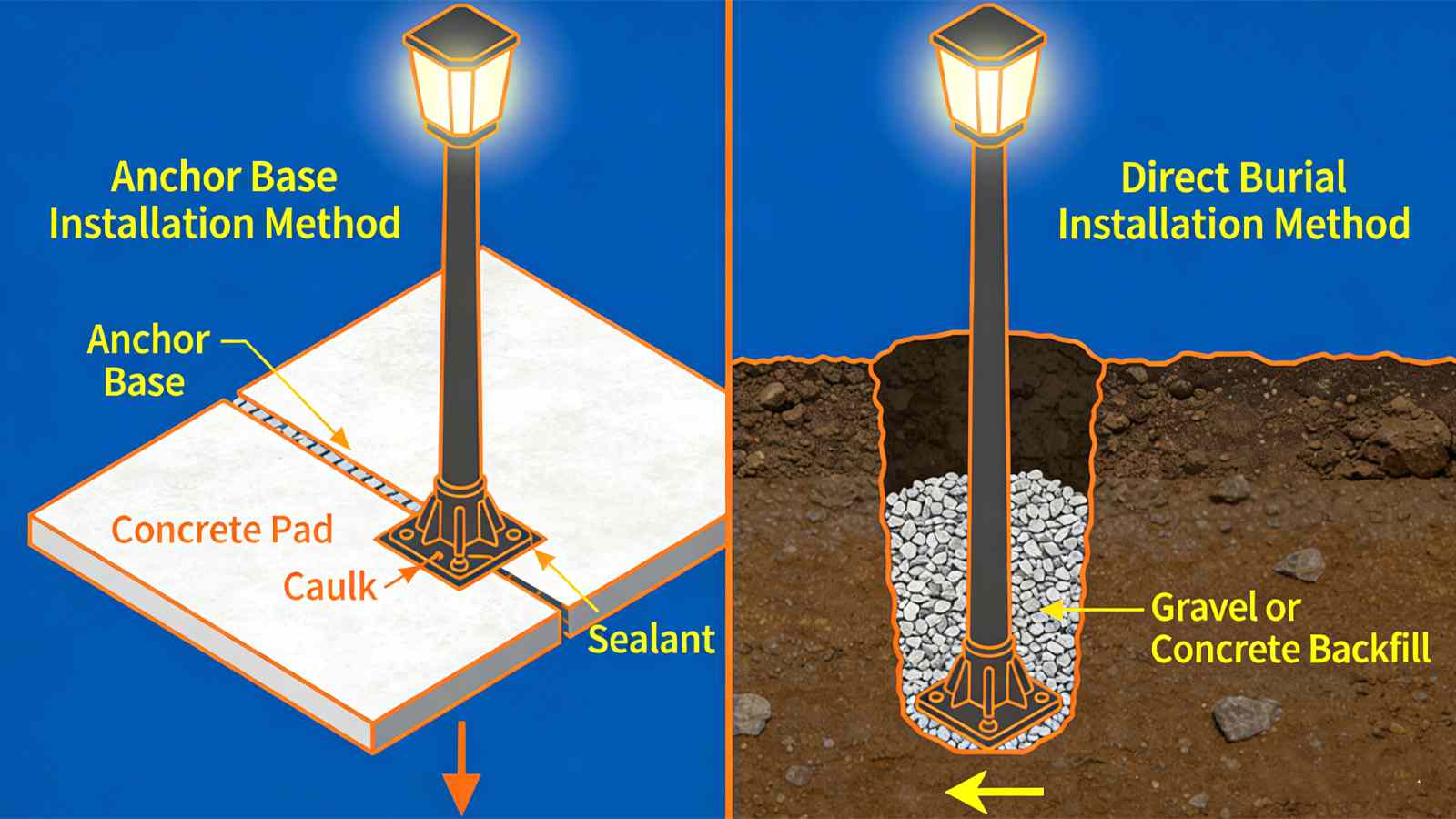
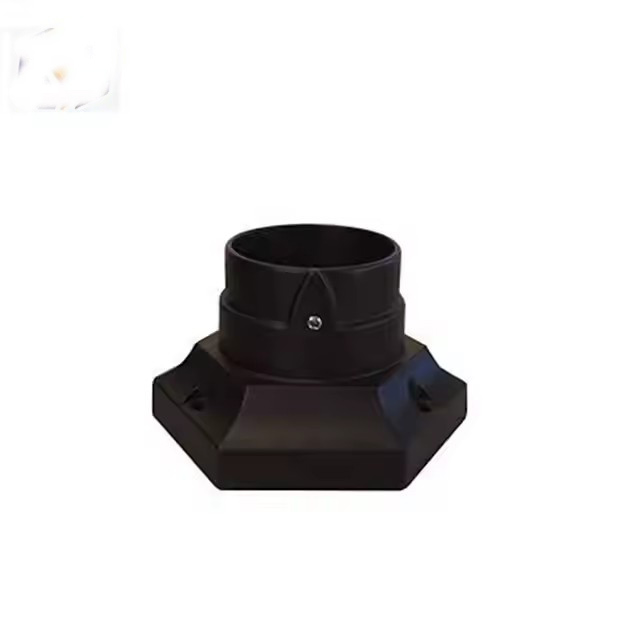
There are several popular designs on the market today. The first is the anchor base. This is very common for taller poles. You will see it on highways and in large parking lots. It uses a set of steel rods sticking out of concrete. The pole has a flat plate with holes. Workers slide the plate over the rods and tighten nuts. This creates a very strong mechanical connection. It is also adjustable. If the concrete is a little uneven, you can shim the plate to make the pole straight.
The second design is the embedded base. This is where the pole goes directly into a hole in the ground. We often call this “direct burial.” It is a simpler method in some ways. You do not need to pour a big concrete pad first. You just dig, set the pole, and fill the hole. The fill material is usually concrete or compacted stone. This is a favorite for residential areas and parks. It looks clean and simple because you do not see a big metal plate at the bottom.
However, embedded poles have a challenge. The part of the pole in the ground can rot or rust. This is especially true for wooden or steel poles. To prevent this, the base of the pole needs a treatment. Steel might get a heavy galvanized coating. Wood might be treated with preservatives. Aluminum does not have this problem. It naturally resists rot, which makes it a great choice for this style of installation.
The materials used for manufacturing Lamp post Bases vary a lot. Cast iron is a traditional favorite. It is very heavy and strong. It has a classic look that people love for historical districts. But it has downsides. It is heavy to ship. It can also rust if the paint gets scratched. That adds to the maintenance costs over the life of the product.
Cast aluminum is another top choice. It is much lighter than iron. This saves money on shipping, which is a big deal for international dealers. It also resists rust naturally. Even if the paint scratches, the metal underneath will not turn to red dust. It forms a protective oxide layer instead. This makes it perfect for wet climates or coastal areas where salt is in the air.
Steel is used for many fabricated bases. These are made by welding plates together. Steel is incredibly strong. It can handle very tall poles and large light fixtures. The key with steel is the finish. It must be galvanized or powder coated well. If the coating fails, the steel will rust quickly. For municipal projects, steel is often the go-to material for highway lighting because of its strength.
We also see a rise in composite materials. Some bases are now made from reinforced polymers. These look like metal but are lighter and never corrode. They are resistant to UV rays from the sun. They also do not conduct electricity, which adds a layer of safety for workers. These are great for decorative applications where you want a specific color or texture without the worry of rust.
Installation quality is just as important as the base itself. For an anchor base, the concrete footing must be level. The anchor bolts must be placed exactly right. If the bolts are off by half an inch, the pole holes will not line up. Workers use a template to hold the bolts in place while the concrete cures. This simple step prevents huge headaches later on.
Once the pole is bolted down, you must seal the base. There is usually a gap between the metal plate and the concrete. Water can sit in this gap. Over time, that water can cause problems. It might freeze and expand. It might cause corrosion. A bead of silicone caulk or a rubber gasket solves this. It keeps moisture out and keeps the connection dry.
For embedded poles, the backfill process matters a lot. You cannot just dump concrete in and walk away. The concrete needs to be vibrated or rodded to remove air pockets. If you use stone, you must tamp it in layers. This compacts the material so the pole does not settle later. Loose backfill is a common reason for poles becoming loose after a few years.
The electrical connection also happens at the base. The wires from the power source come up into the pole here. In anchor bases, there is often a hole in the center of the plate. The wires come up through the concrete conduit and into the pole. This keeps them protected from damage. In some designs, there is a hand hole on the side of the base. This lets electricians access the wires without taking the pole apart.
Safety is a huge factor in modern base design. On highways, we use breakaway bases. If a car hits the pole, the base is designed to shear off. This reduces the impact force on the vehicle and its passengers. It saves lives. These bases use special couplings that break away cleanly. The electrical disconnect also happens automatically in many designs.
For municipal buyers, longevity is the name of the game. They do not want to replace poles every few years. They want a product that lasts for decades. This is why the coating on the base is so important. A high-quality powder coat will resist fading and chipping. It keeps the base looking new for a long time. It also protects the metal from the elements.
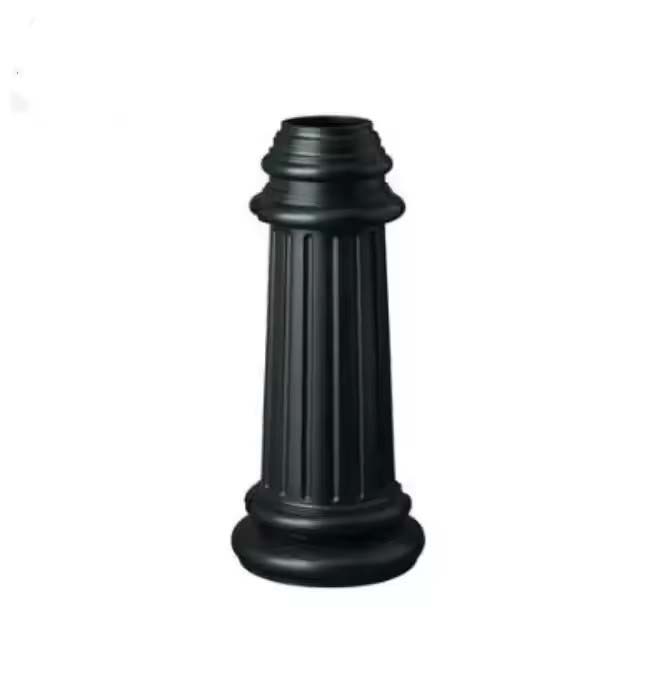
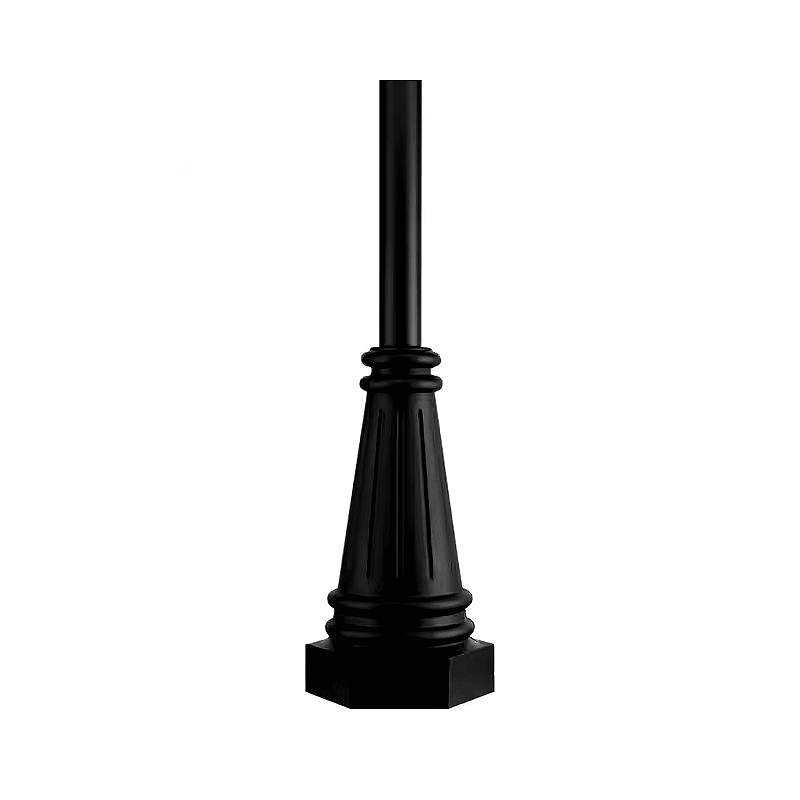
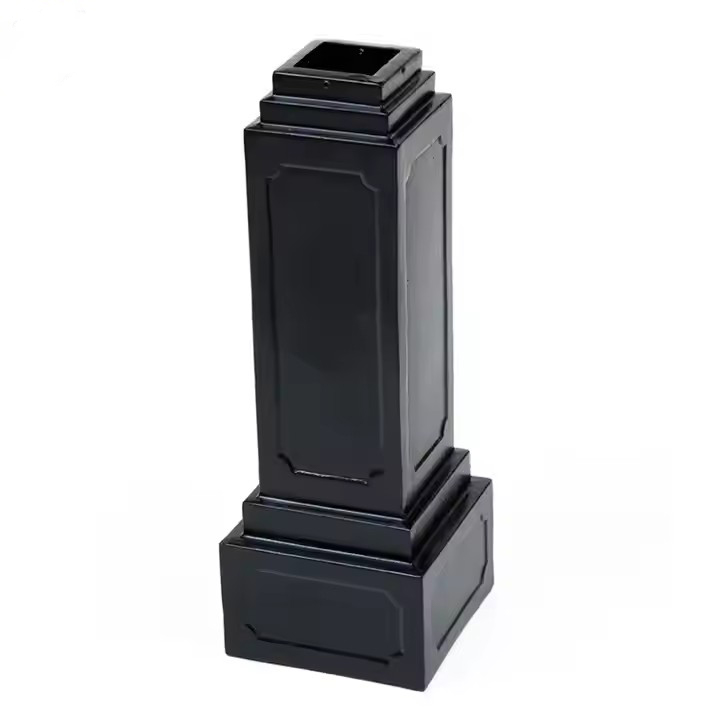
Dealers should also consider the look of the base. Sometimes the client wants the base to match the pole exactly. Other times, they want a contrasting color. A black base with a white pole is a classic look. It adds visual interest to the streetscape. The base can also have decorative details like fluting or acanthus leaves. These details add value to the project.
When you are ordering for a big project, check the hardware. Some bases come with the nuts and washers included. Others require you to buy them separately. The bolts must be the right grade. A cheap bolt can snap under stress. Stainless steel hardware is often a good investment for coastal areas. It resists the salt better than plain steel.
The size of the base must fit the pole diameter. This sounds simple, but it is easy to get wrong. A standard residential pole is often three inches. A commercial pole might be four or five inches. The base must have a socket that fits snugly. If it is loose, the pole will wobble. Set screws can help, but a tight fit is always better.
For international shipping, weight is money. Aluminum bases are a winner here. You can pack more of them in a shipping container. This reduces the freight cost per unit. It also makes them easier to handle at the job site. Workers do not need heavy machinery to move them around. One person can often carry a small aluminum base by hand.
Climate plays a big role in base selection. In cold areas, you have to think about frost. The ground freezes in the winter. The bottom of your foundation must be below the frost line. If it is not, the freezing ground will push the pole up. This is called frost heave. It can ruin the alignment of the light. It can also crack the concrete.
In hot, dry areas, the soil can shrink. This can create gaps around an embedded pole. The pole might become loose. Regular inspection helps catch this early. You can add more stone or soil to fill the gaps. Flange mounts are less affected by this because the pole sits on top of the concrete, not in the dirt.
Grounding is another technical detail. The base often has a place to connect the ground wire. This is a safety requirement. If the wiring shorts out, the ground wire gives the electricity a safe path to the earth. This protects people from getting shocked. The connection point is usually a threaded hole with a brass lug. It must be clean and tight.
The manufacturing process affects the final look. Cast bases are made by pouring molten metal into a mold. This allows for complex shapes. You can have lots of details and curves. Fabricated bases are made by cutting and welding flat plates. This is better for simple, geometric shapes. Knowing the difference helps you pick the right style for the job.
Resin bases are made in a different way. They use a process called rotational molding. Plastic powder is put into a mold. The mold is heated and spun around. The plastic melts and coats the inside of the mold. This creates a hollow, seamless part. It is very strong and durable. The color can be molded right in, so scratches do not show.
When writing a specification, be specific. Do not just say “lamp post base.” Say what you need. Do you need it for a three-inch pipe? Do you need a certain bolt circle diameter? Do you need a specific color? The more detail you give, the better the supplier can meet your needs. This prevents mistakes and delays.
Maintenance crews love good access. A base with a removable cover makes their job easy. They can get to the wiring without a lot of hassle. They can replace a photocell or a ballast in minutes. If the access is bad, a simple repair becomes a big project. Good design thinks about the person who will service the light ten years from now.
The proportion of the base to the pole is a design consideration. A base that is too small looks unstable. A base that is too large looks clumsy. There are guidelines to help with this. Usually, the base should be wider than the pole. It should have a visual weight that matches the height. Getting this right makes the whole installation look professional.
In summary, the lamp post base is a critical component. It does so much more than hold the pole up. It provides stability against wind. It protects the electrical connections. It adds to the visual appeal. It ensures safety for the public. For all these reasons, choosing the right base is a decision that deserves careful thought.
By learning about the different types of Lamp post Bases, you can make better choices for your projects. You can avoid common installation errors. You can offer your customers products that are safe, durable, and attractive. That is the goal of everything we do here. We want to help you light up the world, one solid foundation at a time.
High-Margin Products for Municipal Projects
Compare with related municipal Lamp Post Bases



Leave A Message