Explore concrete, steel, aluminum, and fiberglass Lamp post Bases. Learn pros, cons, and best uses to help your customers choose the right foundation today.
Choosing the Right Foundation
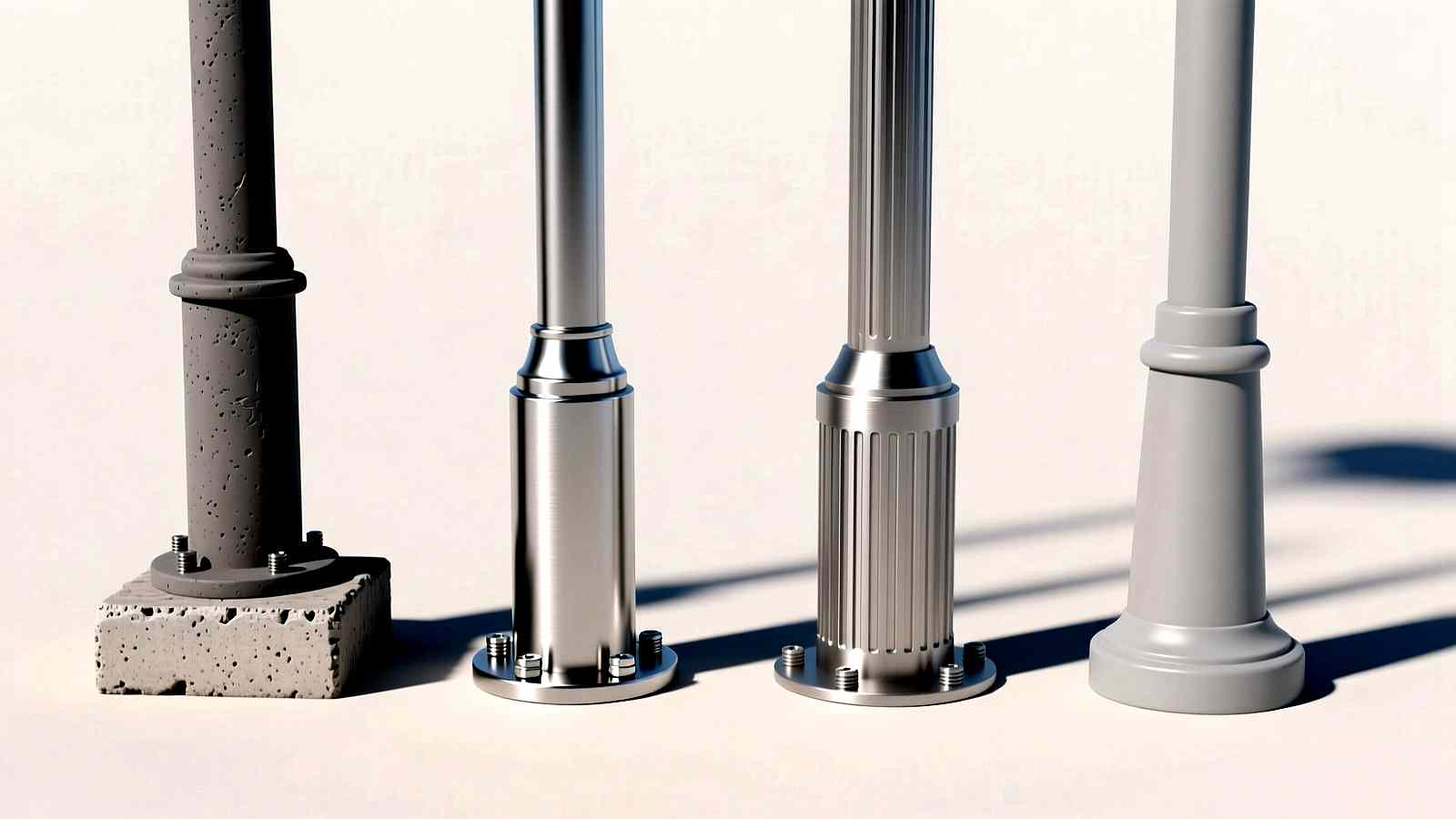
Selecting the correct base is vital for any lighting project. The stability of the entire pole depends on this single component. Distributors often face questions about which material works best. Clients need clear answers to make informed decisions. We compare the most common options available today. Each material offers unique benefits for specific situations. Understanding these differences helps you serve customers better. Let us look at how each type performs in real-world settings. Your expertise guides clients toward lasting solutions.
The Strength of Concrete Options
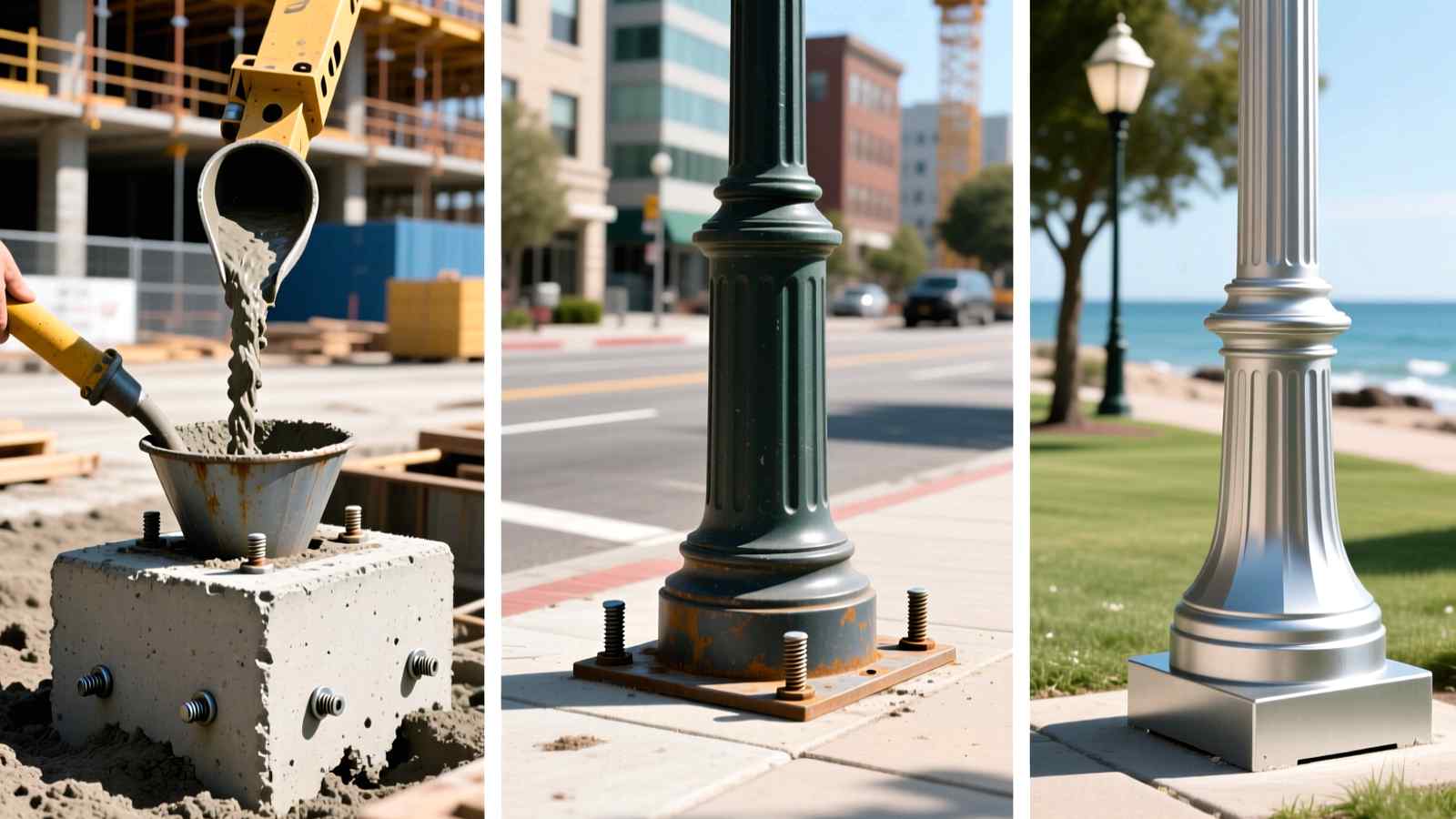
Concrete remains a classic choice for many projects. These Lamp post Bases provide immense weight and stability. Heavy winds rarely topple poles set in solid concrete. The material handles heavy loads without bending or warping. Installation usually requires digging a deep hole first. Workers pour wet mix into the excavation site. The pole gets placed before the substance hardens fully. This process creates a permanent bond with the ground. Durability is a major selling point for concrete. It resists rot and insect damage effectively over time.
However, cracking can occur in freezing climates. Water seeps into small gaps and expands when frozen. This pressure causes structural weakness eventually. Repairs are difficult once the base sets hard. Removal involves heavy machinery and significant labor costs.
Transporting pre-cast units adds expense due to their weight. Logistics become complex for remote job sites. Despite these issues, many engineers still trust concrete. Its long lifespan often justifies the initial effort. Cost per unit stays competitive compared to alternatives. Bulk orders reduce the price significantly for large developments.
Steel Bases for Heavy Duty Needs
Steel offers incredible strength for demanding environments. These Lamp post Bases support tall poles in high-traffic areas. Impact resistance is superior when vehicles might strike the pole. Galvanized coatings protect against rust and corrosion well. Modern treatments extend the life of steel components further. Fabrication allows for custom shapes and anchor bolt patterns. Flexibility in design meets various architectural requirements. Installation is generally faster than pouring concrete footings. Pre-fabricated units arrive ready to bolt down quickly. This speed saves money on labor charges at the site.
Weight is less than concrete but still substantial enough. Stability comes from the rigid connection to the ground. Maintenance involves checking for coating damage periodically. Scratches expose bare metal to moisture and air. Rust forms quickly if left untreated in coastal zones. Salt spray accelerates deterioration in marine environments. Regular inspections prevent costly replacements later on. Steel prices fluctuate based on global market trends. Budget planning must account for these potential variations. Yet, the reliability keeps steel popular among contractors. Many municipalities specify steel for street lighting projects.
Aluminum for Lightweight Applications
Aluminum provides a lighter alternative for specific uses. These Lamp post Bases simplify handling during installation. Crews move them easily without heavy lifting equipment. Shipping costs drop significantly due to reduced mass. Natural oxide layers offer good corrosion resistance inherently. No painting is required for basic protection in most zones. The material does not rust like untreated steel ever. Aesthetic appeal is high with a clean modern look. Powder coating adds color options for design flexibility. Urban planners often choose aluminum for decorative streetscapes.
Strength-to-weight ratio is impressive for this metal. However, it lacks the sheer mass of concrete or steel. High wind zones might require larger dimensions for stability. Softness makes it prone to denting upon impact. Forklifts or trucks can damage the base accidentally. Anchoring systems must be designed carefully for load transfer. Thermal expansion rates differ from other construction materials. Joints need allowance for movement during temperature swings. Cost is typically higher than standard steel options. Specialized alloys increase the price point further. Yet, lifecycle costs remain attractive due to low maintenance.
Fiberglass Solutions for Harsh Zones
Fiberglass composites represent modern engineering innovation. These Lamp post Bases excel in highly corrosive environments. Chemical plants and coastal roads benefit greatly from this trait. Salt water and industrial fumes do not degrade the material. Electrical insulation is another key safety feature provided. Utility workers face lower risks during maintenance tasks. The non-conductive nature prevents accidental shocks completely. Weight is very low compared to traditional options. One person can often carry a base to the spot. Installation time shrinks dramatically with these lightweight units.
Durability against UV radiation varies by manufacturer quality. Resin formulas determine resistance to sun exposure over years. Poor quality units may chalk or fade in intense sunlight. Structural integrity remains intact even if surface aesthetics change. Impact resistance is moderate but better than some expect. The material flexes slightly under stress rather than snapping. This elasticity helps absorb energy from minor collisions. Repairing damage is difficult and often requires replacement. Initial purchase price is usually the highest option. Long-term savings come from zero corrosion maintenance needs. Specific industries demand these specialized properties regularly.
Comparing Costs and Lifespan
Budget constraints drive many purchasing decisions globally. Concrete starts cheap but hides labor expenses deeply. Steel balances upfront cost with moderate maintenance needs. Aluminum costs more initially but saves on shipping and install. Fiberglass demands high investment for niche applications. Lifespan expectations vary widely across different climates. Concrete lasts decades unless freeze-thaw cycles attack it. Steel endures well with proper coating maintenance schedules. Aluminum survives indefinitely without rust concerns mostly. Fiberglass outperforms all in chemical exposure scenarios.
Total cost of ownership tells the true financial story. Cheap bases might fail early and need replacing soon. Expensive options could last the lifetime of the property. Distributors should explain these trade-offs clearly to buyers. Project timelines also influence material selection strongly. Fast-track jobs favor quick-install steel or aluminum bases. Long-term developments allow time for concrete curing processes. Environmental conditions dictate the technical requirements strictly. Coastal projects almost always need non-corrosive solutions. Urban centers prioritize aesthetics alongside function often.
Making the Best Choice for Clients
Your role involves matching needs to the right product. Ask about location and environmental factors first. Wind loads and soil conditions matter for stability. Traffic levels determine impact resistance requirements. Budget limits define the feasible range of options. Aesthetic goals influence the final visual appearance. No single material wins every comparison scenario. Context determines the winner in each specific case. Concrete suits heavy-duty rural roads perfectly well. Steel fits busy city intersections with crash risks. Aluminum enhances parks and pedestrian plazas beautifully. Fiberglass protects assets in harsh industrial zones.
Knowledge empowers you to guide customers confidently. Explain why one option beats another for their site. Use real examples from past successful projects. Highlight how proper bases prevent future pole failures. Emphasize safety and longevity as primary values. Customers appreciate honest advice over simple sales pitches. Trust builds long-term business relationships effectively. Keep updated on new material technologies constantly. Manufacturing improvements change performance metrics yearly. Stay ahead of trends to offer cutting-edge solutions. Your expertise adds value beyond just supplying parts.
Selecting Lamp post Bases requires careful thought and analysis. Each material brings distinct advantages to the table. Understanding these nuances separates good distributors from great ones. Help your clients build infrastructure that stands the test of time. The right foundation ensures light stays on for years.
High-Margin Products for Municipal Projects
Compare with related municipal Lamp post Bases
Leave A Message