Raw Material Control
We start with certified ductile iron. Every batch gets a full spectral test before it enters our foundry. This ensures the carbon and silicon ratios meet your exact mechanical requirements. Substandard materials are rejected immediately. By controlling the input, we prevent later failures.
Mold Engineering for Better Yield
Our engineers carefully design the gating system for each new bollard mold. Metal flow and solidification are studied in advance. This step reduces internal shrinkage and porosity. It also boosts our production yield significantly. Better mold design means fewer scrapped castings. That efficiency is passed on to you.
Standardized In-Process Guidelines
Workshop operators follow written Standard Operating Procedures for every stage. Melting temperatures, pouring speeds, and cooling times are all documented. QC staff do hourly walk-throughs. These checks confirm that every bollard matches the same approved standard. Human error is minimized through this daily routine.
Strict Dimensional and Interchangeability Checks
After cleaning, each casting receives a full dimensional inspection. Height, base hole sizes, and vertical alignment are measured with calibrated gauges. We also test the interchangeability of all parts. Any base will fit any post from the same batch. This ensures smooth installation at your job site.
Dual-Layer Coating for Long-Term Rust Protection
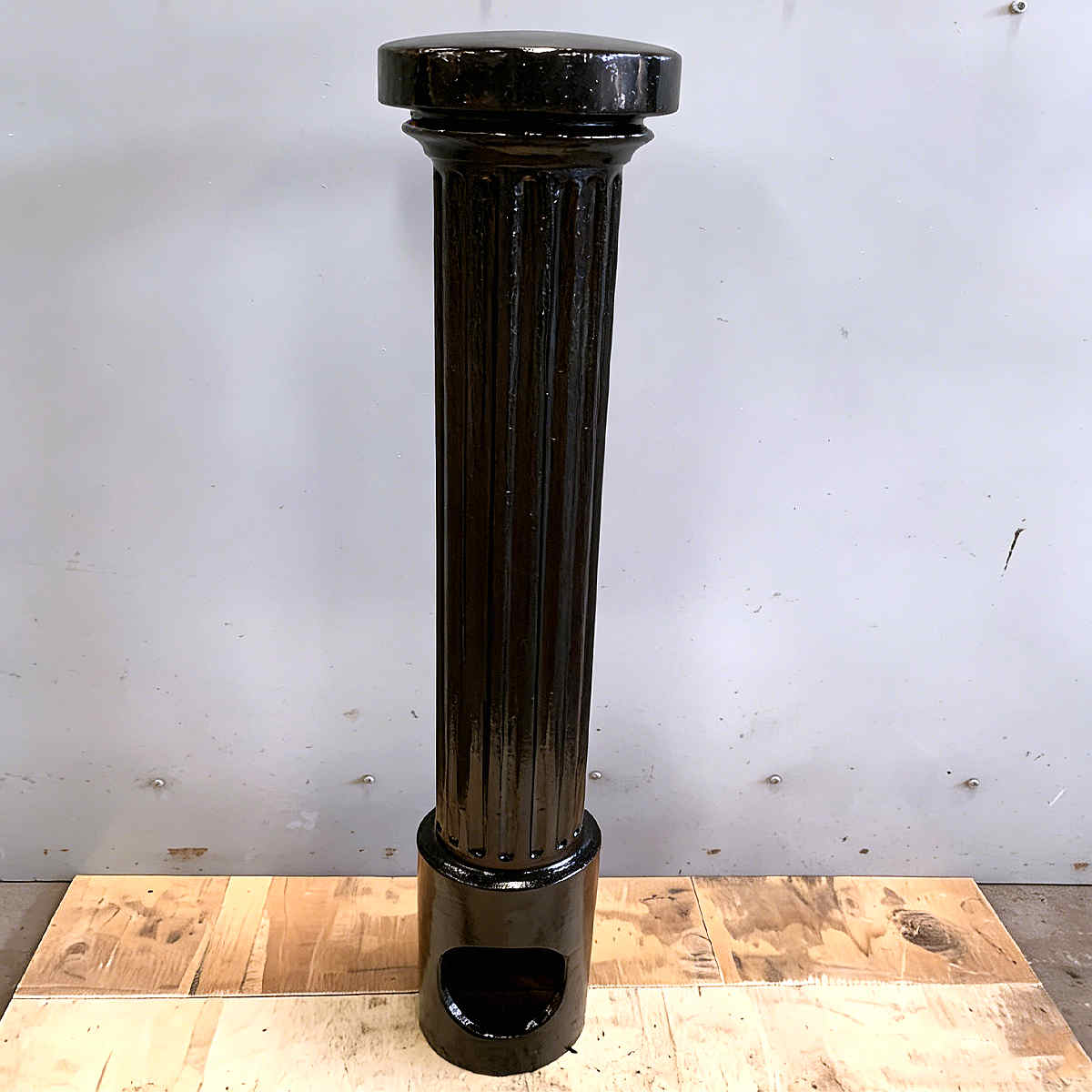
Outdoor bollards face rain, salt, and UV exposure. Our standard finish uses a two-step method. First, the entire casting passes through an E-coat line. This layer is held at 15 to 20 microns. It protects every inner cavity from corrosion. Then a weather-resistant polyurethane topcoat is sprayed. The final paint thickness reaches 120 to 180 microns. We measure these values with a film gauge on each piece.
Raw Casting Deliveries Are Also Controlled
Some clients order bare castings for their own local painting. For these orders, we apply an even tighter surface standard. All blowholes, sand inclusions, cold shuts, and visible defects are ground out by hand. The final surface is clean, smooth, and free from blemishes. Your local paint team can work directly on these surfaces without extra prep.
Final Quality Check Before Shipping
A dedicated QA team performs random sampling per AQL standards before container loading. Coating adhesion is tested with the cross-hatch method. Salt spray resistance is verified when required. Any item that fails these tests is removed from the batch. Only fully approved products enter our packing area.
Export-Grade Packaging for Sea Freight
Each 40kg bollard is wrapped in high-density EPE foam. Then it is placed inside a heavy-duty corrugated carton. The top cap and base are reinforced with extra padding. This design protects the coating during long sea voyages. It also allows for simple forklift handling. We have loaded this batch into standard 20-foot and 40-foot containers without a single damage report.
Our Commercial Terms
We accept T/T with a 30 percent deposit and 70 percent balance against the bill of lading copy. We also offer L/C at sight combined with the same 30 percent deposit. This flexibility helps you manage your cash flow.
Customization and After-Sales Service
Custom sizes, mounting hole layouts, and colors are all available. You can even request a custom logo pressed into the casting. Our engineers will match your drawings. If a quality problem appears after your end user installs the product, we trace it back using our batch records. Any defect caused by our foundry is handled with a fair replacement or compensation plan. Your trust is our priority.

Leave A Message