Detailed Description
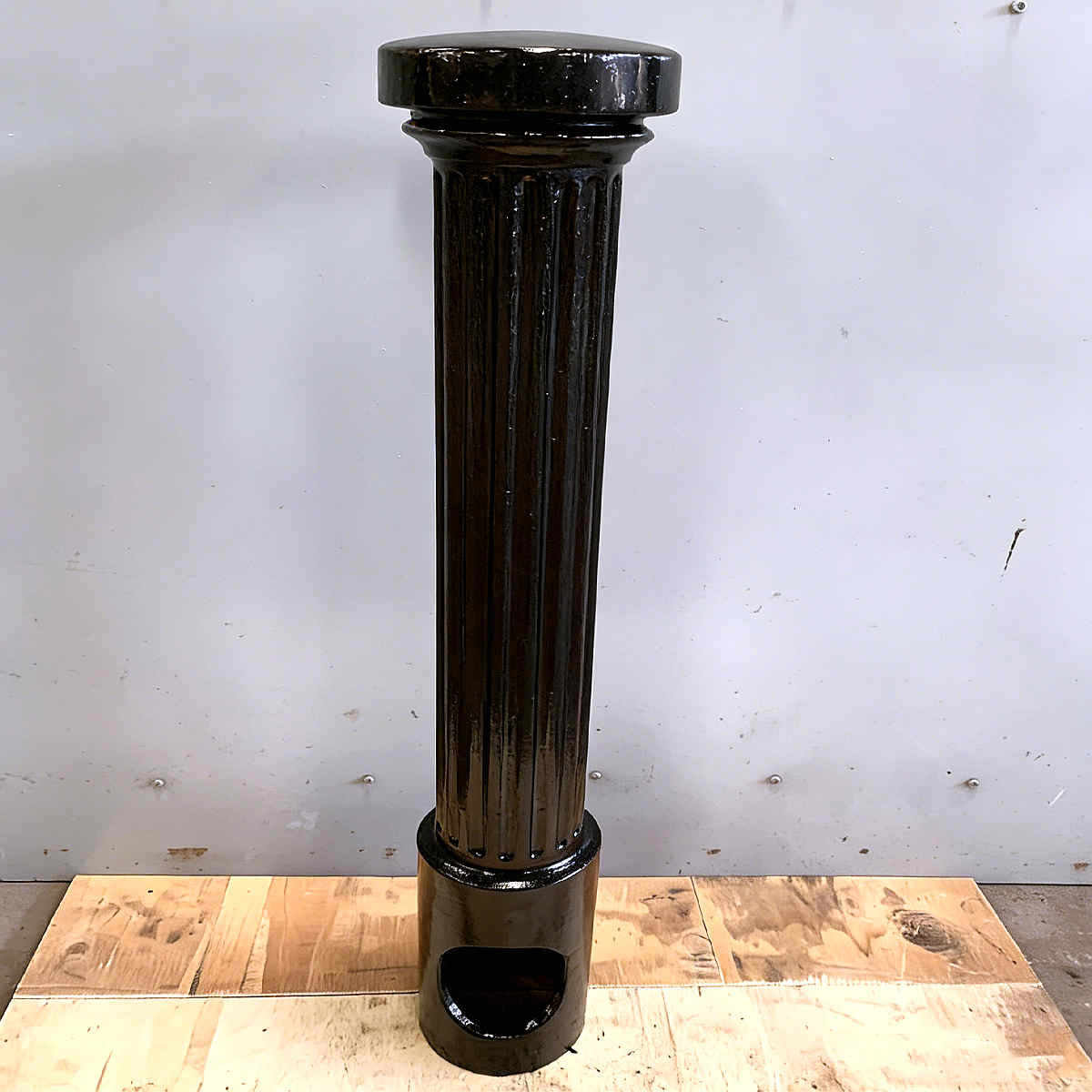
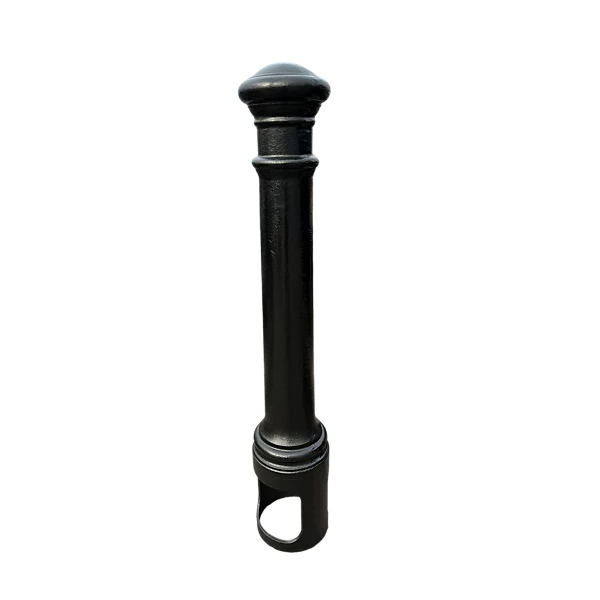
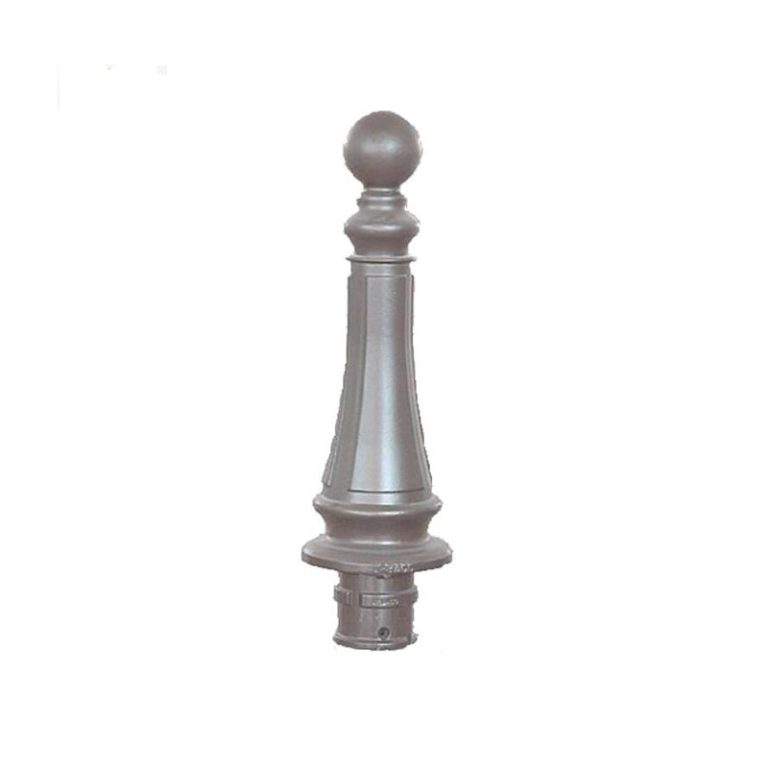
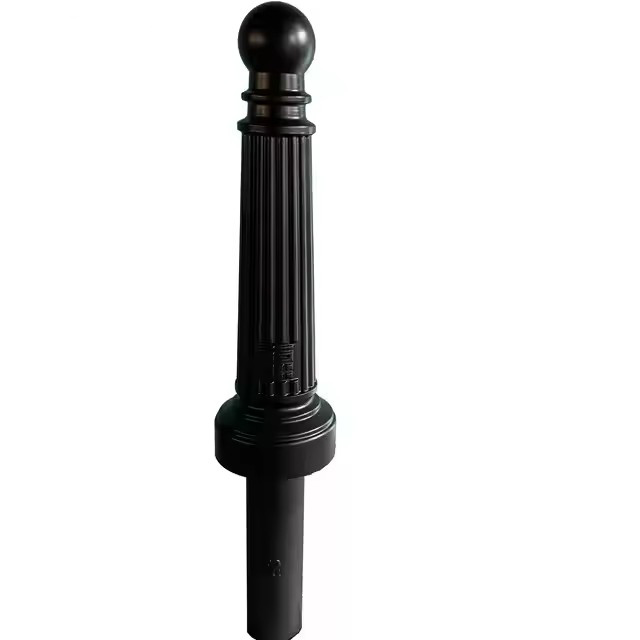
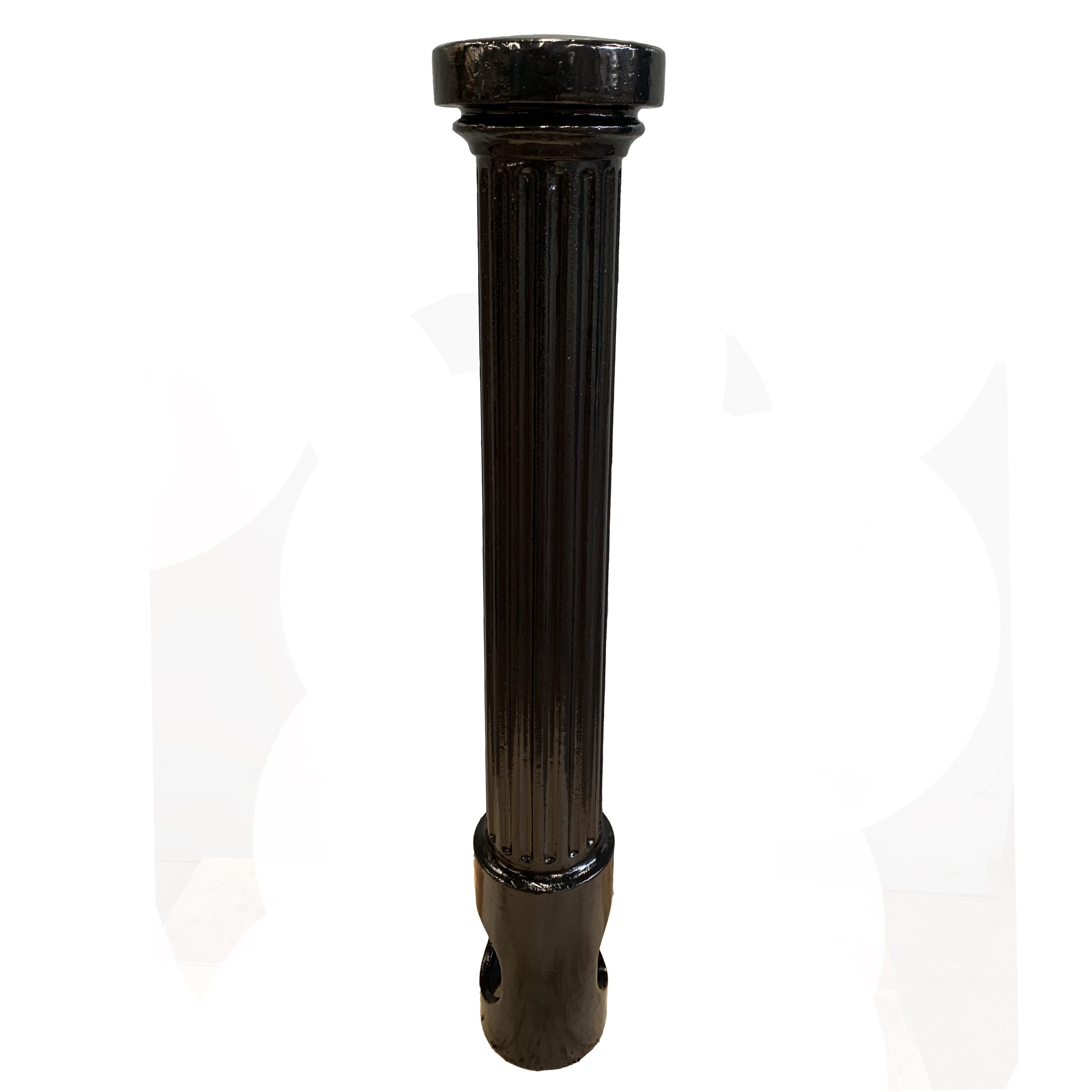
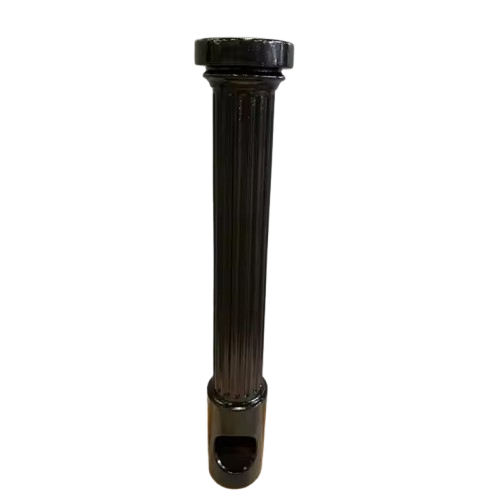
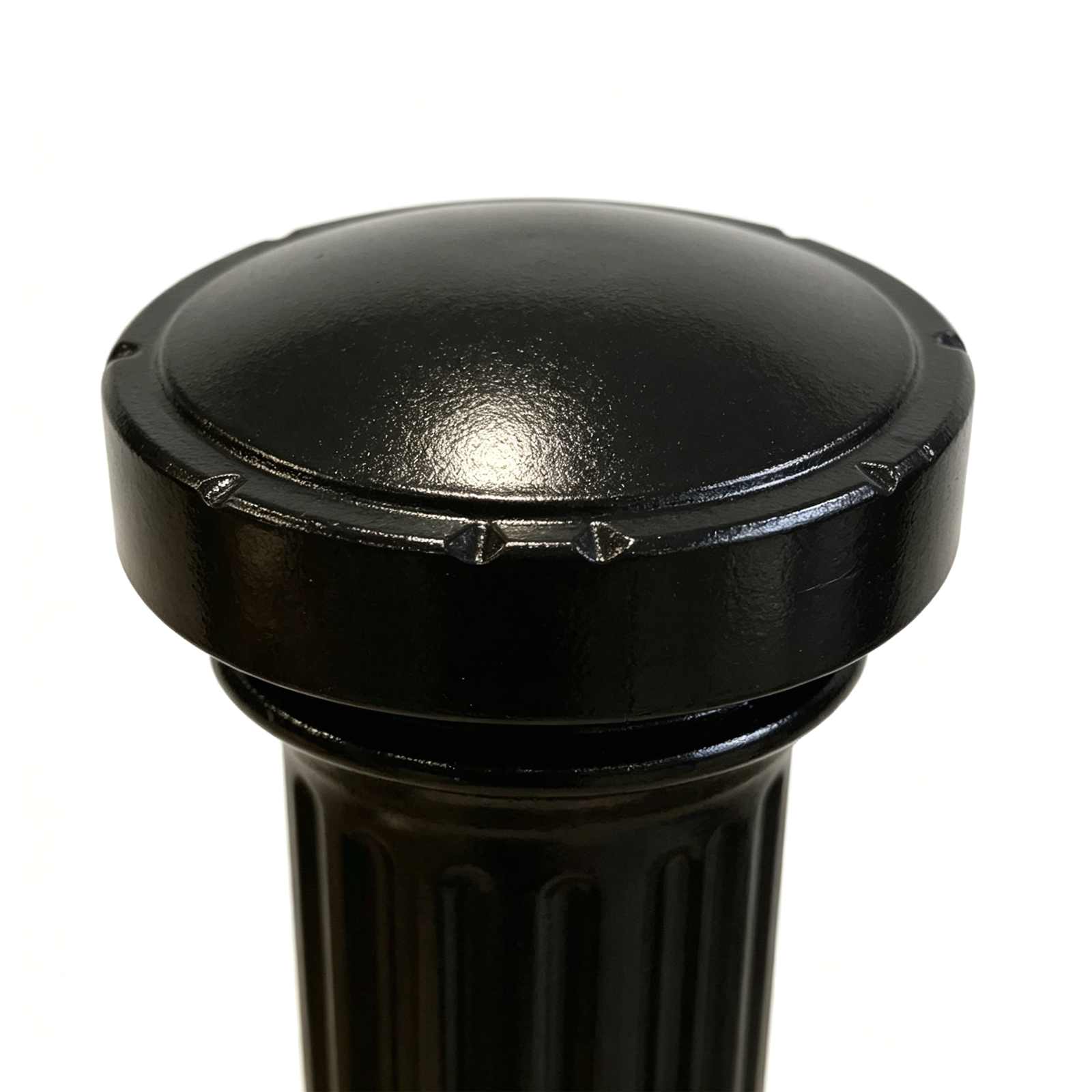
The HS-CB008 series cast iron bollard stands at 1205mm, a height chosen to establish clear physical presence without obstructing sightlines across public plazas or storefronts. It is cast as a single piece in green sand molds from ASTM A48 Class 35B gray iron, which means the entire body—from the domed cap down through the fluted column to the integrated base flange—contains no welded joints.
This is a deliberate engineering choice: in our experience supplying municipal projects, the most common failure we see in competitive bollards is cracking at a welded base connection after repeated low-speed vehicle nudges. A one-piece casting distributes that impact stress through the whole structure rather than concentrating it at a seam, which is why this design has held up in streetscape applications where maintenance access is limited and callbacks are expensive.
The fluting is not machined on after casting; it comes directly from the mold cavity, shaped by a proprietary pattern we have refined over multiple production runs to ensure consistent relief depth around the circumference.
This method achieves the architectural character that heritage consultants and landscape architects look for in period-sensitive districts—the shadow lines read clearly even under flat overcast light—while keeping unit cost predictable for contractors ordering across multiple phases of a development.
After shakeout and shot blasting to remove foundry sand, each bollard enters our duplex coating line. The first layer is a hot-dip galvanizing bath that metallurgically bonds zinc into the iron surface. This provides cathodic protection: if the coating is scratched down to bare metal during installation or service, the surrounding zinc sacrifices itself rather than letting the iron rust.
Once the galvanized layer has cured, we apply a matte black polyester powder coat electrostatically and bake it on. The powder layer seals the zinc from atmospheric moisture and UV exposure, and the matte finish was specified after field feedback that high-gloss bollards in coastal or high-rain environments tended to show water-spotting and dust accumulation too visibly.
Together, the two layers have passed 500 hours of neutral salt spray testing with no red rust at scribe—a standard we publish because we know contractors are often asked to provide coating warranty documentation for public tenders.
For the installer, the integrated base flange is pre-drilled for anchor bolts on a standard bolt-circle pattern, and the bollard ships in individual fumigated wooden crates with the flange protected by a removable edge guard.
This keeps the mating surface clean and flat until the moment of installation, which avoids the on-site grinding that can occur when base plates arrive with chipped coatings or corrosion from storage.
For the project manager, the value proposition is straightforward: a bollard that arrives ready to install, resists the corrosion and impact cycles of urban streetscapes, and maintains its architectural detail without repainting schedules—backed by a coating warranty and a paper trail of test data that you can include directly in your bid documentation.